Centralize the evidence
Keep policies, due diligence, contracts and supporting documents together with controlled sharing and version history.
Compliance management · Third- and fourth-party oversight
Bring vendor reviews, documents, assessments, approvals and remediation into one secure, structured compliance management portal.
CMS connects the people responsible for oversight with the records, tasks and decisions needed to demonstrate it.
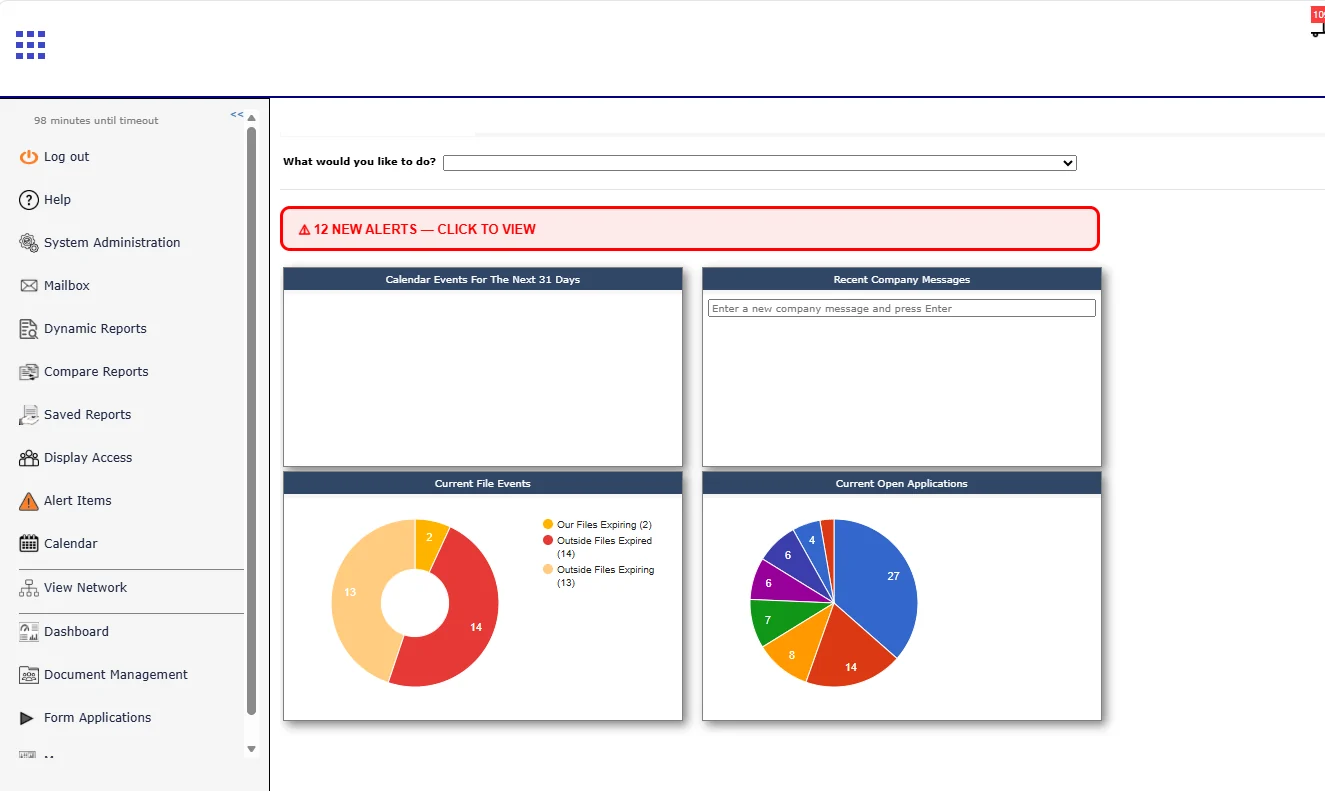
Actual CMS dashboard. Organization, user and record information has been removed.
The problem
Regulated businesses outsource important work, but accountability for oversight remains. Spreadsheets, email and shared folders make it difficult to know which materials are current, what remains outstanding and whether corrective action has been completed.
Keep policies, due diligence, contracts and supporting documents together with controlled sharing and version history.
Onboard, assess and monitor agencies, law firms, providers and their downstream relationships.
Route requests, complaints, reviews, approvals and remediation with defined ownership and deadlines.
Built for day-to-day work
Due diligence, recurring assessments, risk reviews, approvals and ongoing monitoring.
Capture an issue, coordinate responses, preserve supporting records and document closure.
Monitor required records, expiration dates, reminders and follow-up.
Dashboards, heatmaps, reports and audit trails identify open items, decisions and action owners.
Organize policies, procedures and evidence with access controls and version histories.
Route work for manager or client review; document decisions and the actions taken.
Third- and fourth-party oversight
CMS provides a network view of the organizations involved in a compliance program, including vendors and downstream providers. Review the relationships among institutions, servicers, agencies, law firms and other participants without treating each company as an isolated record.
Connected oversight records and controlled access support work across organizational boundaries while preserving appropriate visibility restrictions.
Explore vendor network oversight →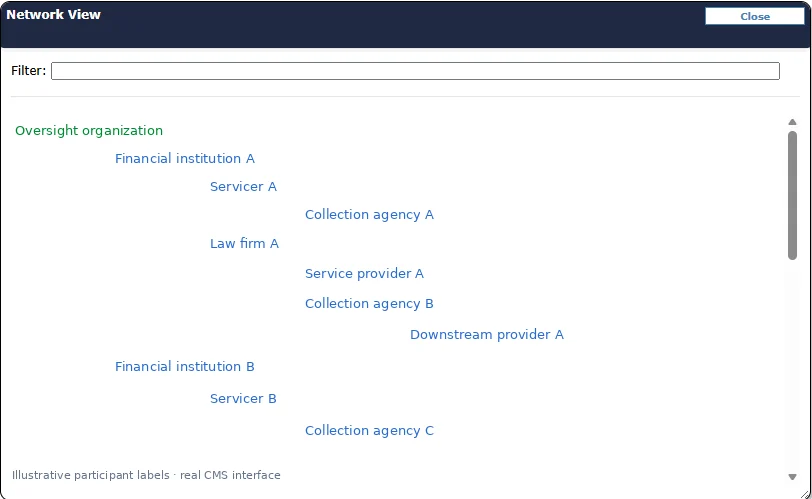
License tracking & geographic visibility
Review collection-license coverage on a color-coded map. Distinguish current licenses, pending renewals, warnings, exemptions and other tracked statuses without searching through individual records.
CMS also organizes supporting license, bond and insurance information, including expirations and follow-up.
Explore compliance tracking →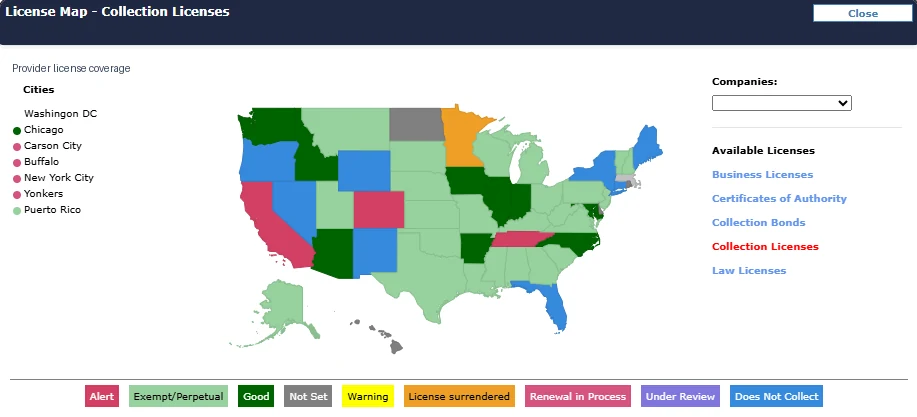
Risk assessments & heatmaps
CMS can score individual assessment items and roll results up by topic, helping reviewers distinguish higher-risk findings from areas where controls appear more effective.
Color-coded scores make exceptions easier to find and provide a practical starting point for assigning follow-up, reviewing controls and documenting remediation.
The example shown is a cybersecurity assessment report. Its scores reflect that example only, not a CMS certification, endorsement, or a statement about a particular customer.
See risk assessment capabilities →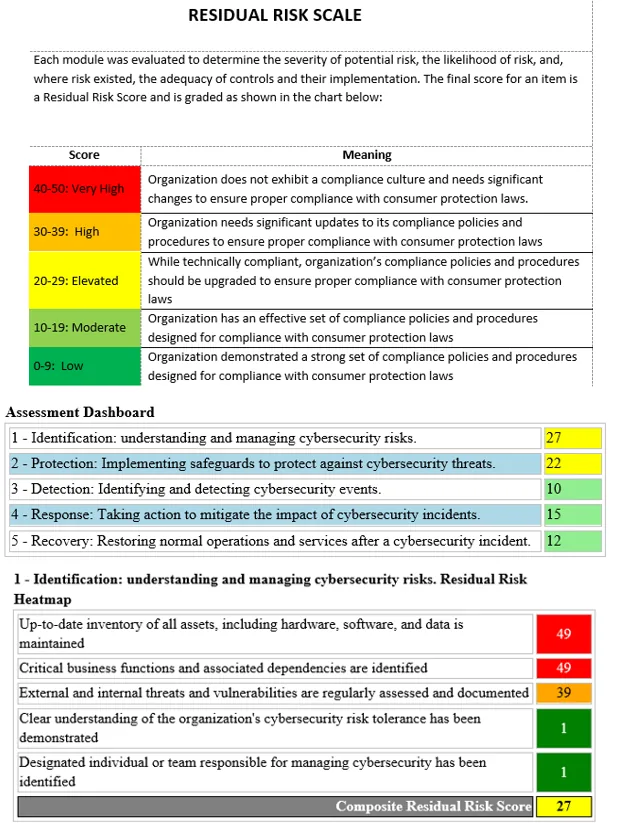
Across organizations
CMS supports information sharing among creditors, lenders, debt buyers, servicers, agencies, law firms and downstream providers without treating every participant as an unrestricted user.
Role-based access and controlled visibility allow teams to work together while maintaining appropriate separation of information.
Explore industry applications →Collect
Gather files, questionnaires and supporting evidence.
Evaluate
Perform reviews, assess risk and document approvals.
Act
Assign requests, track deadlines and resolve findings.
Demonstrate
Retrieve histories, actions and decisions for review.
Start with a focused test
Review a single agency or law firm, or manage one issue across a vendor network. The CMS team can help configure the workflow around your requirements so you can evaluate whether it improves the way your team works.
Discuss a pilot →“CMS converts fragmented administration into a continuous, visible and defensible oversight process.”
See how CMS can structure the evidence, reviews and follow-up your organization already needs.